CASE STUDY
Postcard Engagement Initiative
Convocation Postcard
Graphic Design, Print Design
Software: Illustrator
Software: Illustrator
A human-centered engagement initiative designed to support staff morale through thoughtful, low-cost design.
Overview
Working directly with district administration, I was tasked with developing a morale initiative that could operate within severe budget constraints while maintaining authenticity and staff trust.
I led the research, strategy, and design of a low-cost engagement initiative intended to launch at the staff convocation and continue district-wide throughout the year. In researching approaches to morale-building under constraints, I identified Drew Dudley’s TED Talk on Everyday Leadership as a strong conceptual foundation, emphasizing the lasting impact of small, intentional gestures.
Role: Research, strategy, and design
Deliverable: Printed postcard engagement asset
Deliverable: Printed postcard engagement asset
Challenge
• Staff morale was significantly impacted by the upcoming budget cuts
• Traditional appreciation efforts were not feasible within constraints
• The initiative needed to feel authentic, staff-centered, and non-performative
• Impact needed to extend beyond a single event
• Traditional appreciation efforts were not feasible within constraints
• The initiative needed to feel authentic, staff-centered, and non-performative
• Impact needed to extend beyond a single event
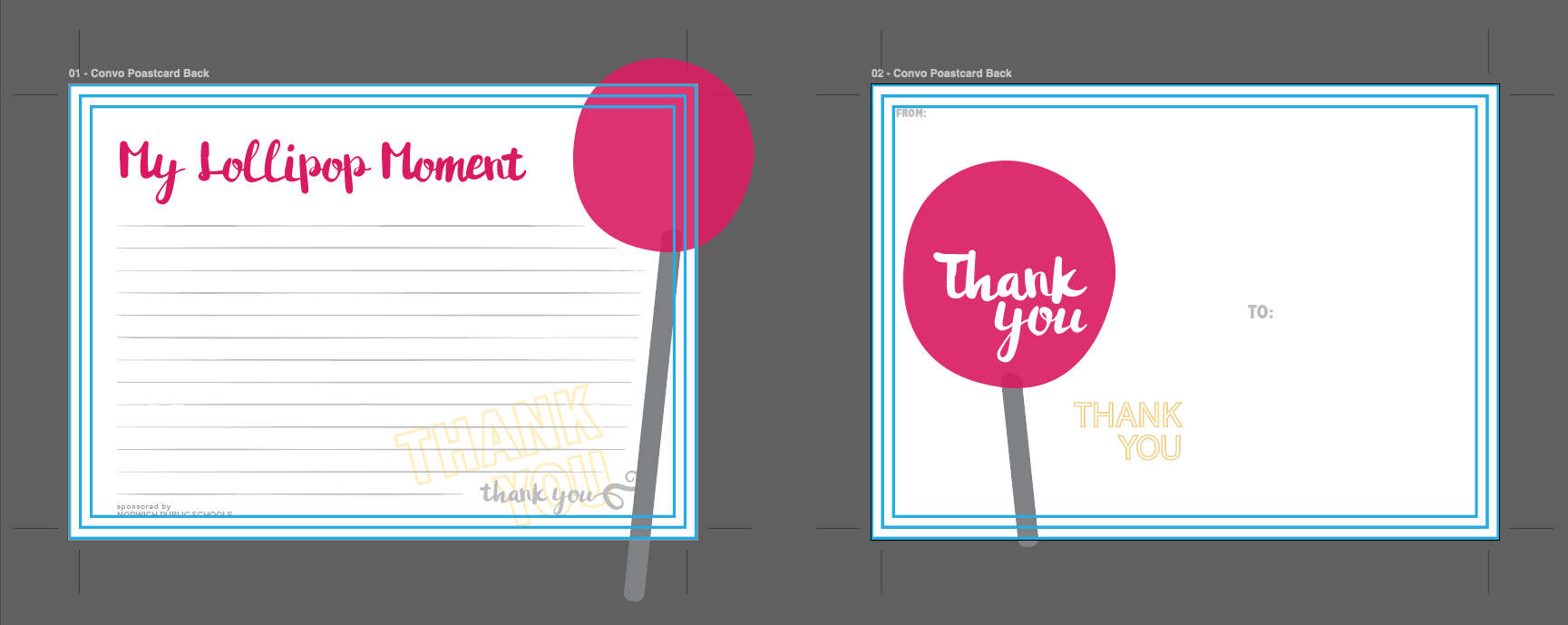
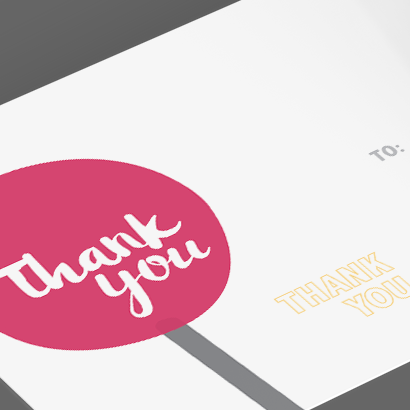
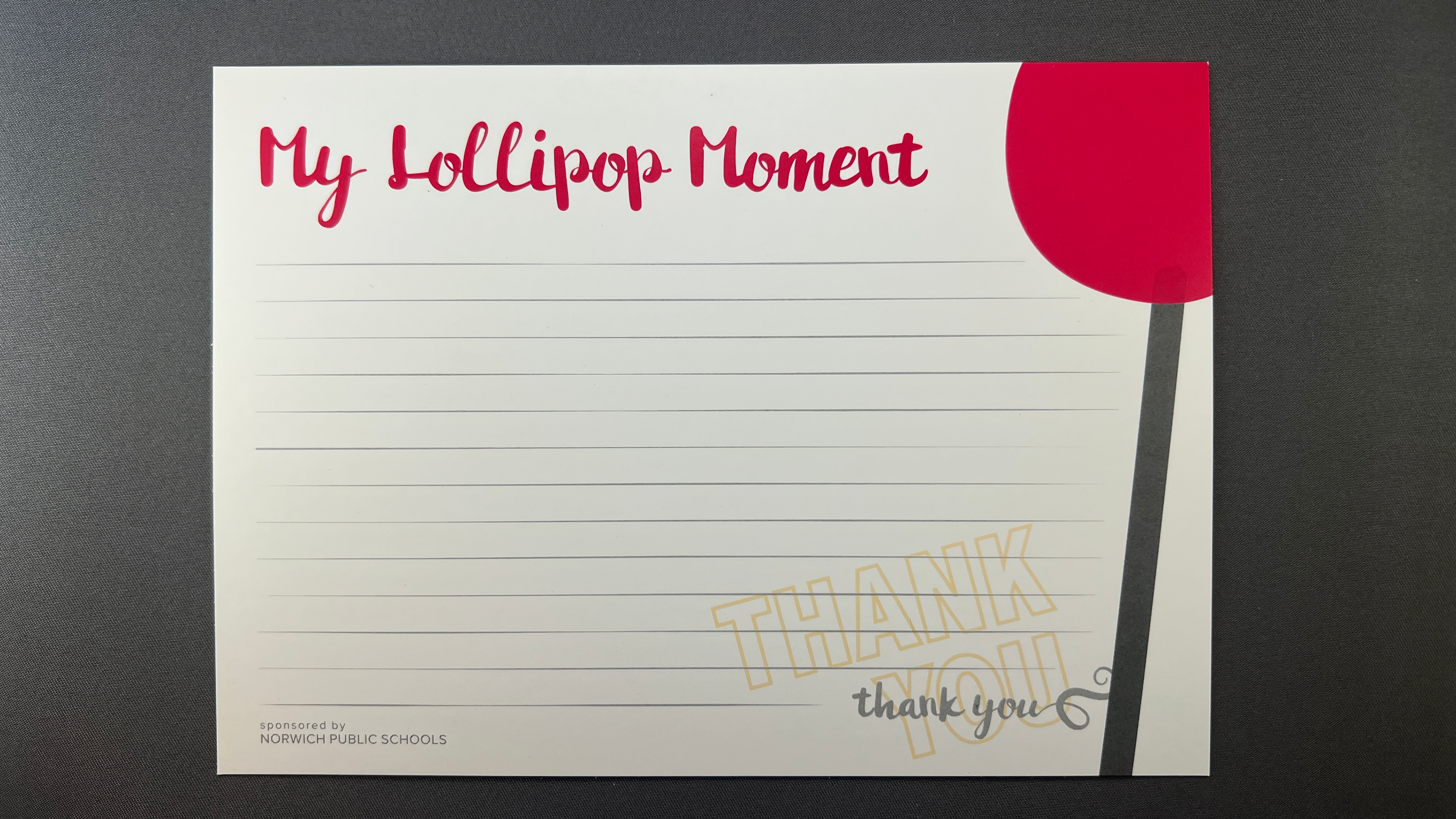
Print-ready postcard design file showing the front and back layouts, including final typography, color, bleed, and trim setup for production.
Concept to Completion
Strategy
Answer = Simple, Repeatable Moments of Recognition
Rather than creating a one-time gesture, I developed a strategy centered on peer-to-peer recognition. The goal was to give staff a simple, tangible way to acknowledge one another, shifting morale-building from a top-down effort to a shared, human experience that could be repeated throughout the year.
Solution
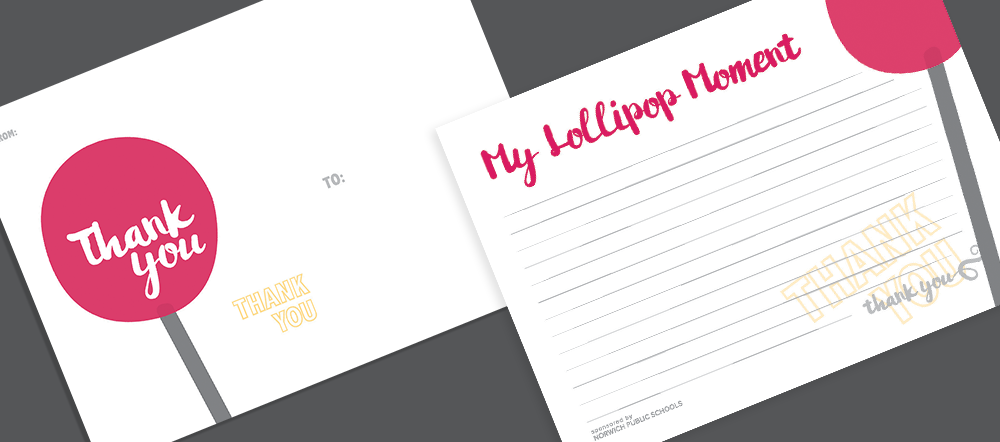
The solution took the form of a printed postcard introduced at the staff convocation and later distributed across schools through internal mail. One side invited personal storytelling, while the other supported direct peer recognition, allowing small moments of appreciation to circulate organically across the district. For the convocation launch, lollipops were adhered to the front of each postcard to physically reinforce the Lollipop Moment concept before the piece continued on its own as a printed tool.
Design Choices
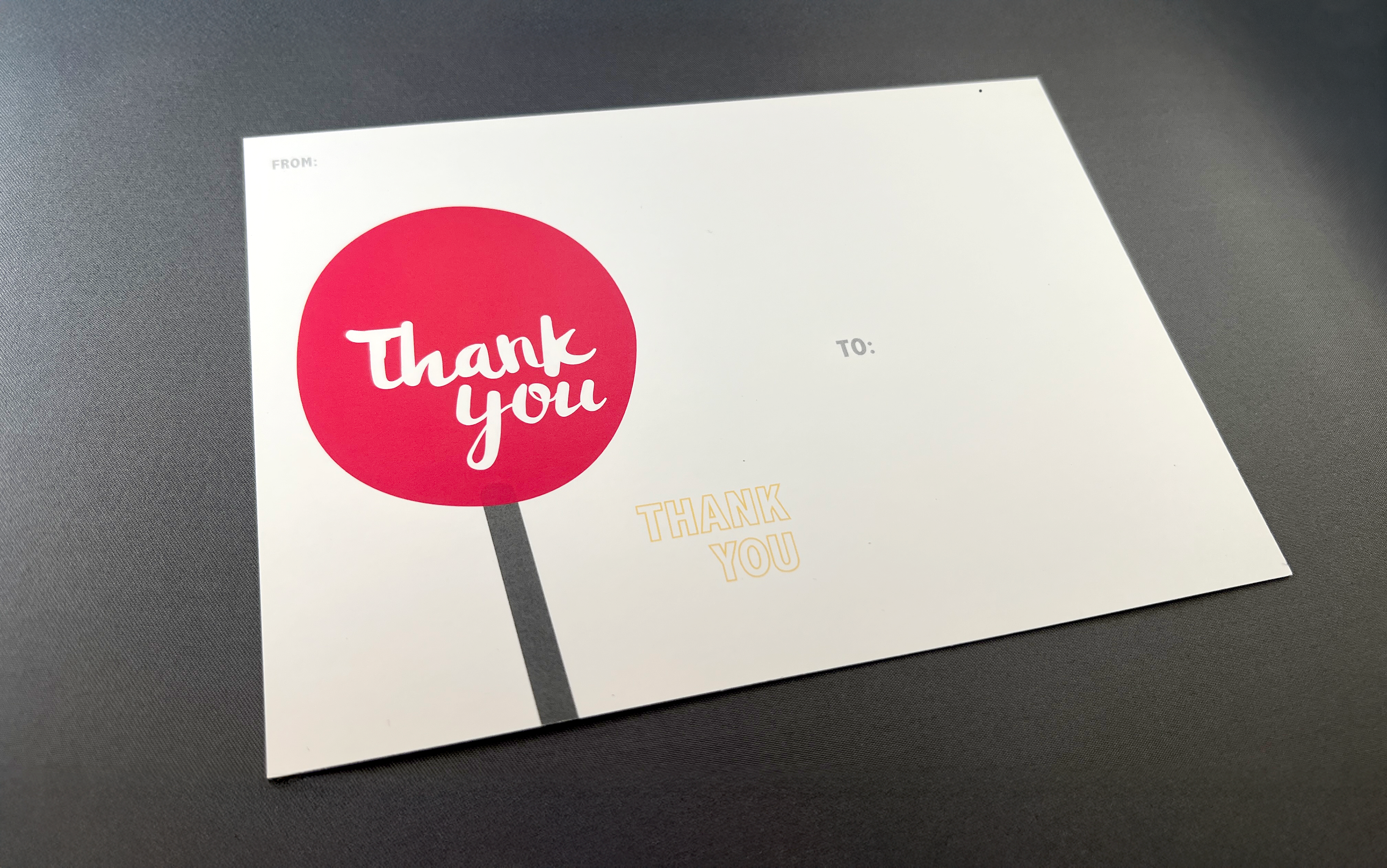
The postcard format was selected for its sense of permanence and value. Heavier stock elevated the piece beyond a disposable handout, while the front-and-back layout supported both personal recognition and written reflection in a single, cost-effective format.
The visual language was designed specifically for an adult, professional audience. Primary colors and juvenile PK–8 aesthetics were avoided in favor of a refined, playful approach. This allowed the piece to feel whimsical and joyful without appearing childish.
To visually anchor the concept to Dudley’s Lollipop Moment, a classic lollipop symbol was used. The traditional red was refined into a bold berry-pink and applied selectively to key elements to create contrast, focus, and an immediate emotional cue of appreciation.
The district acknowledgment was intentionally understated. This provided credit without competing visually with the peer-to-peer stories and messages that were central to the experience.
Video showing the quality of the printed cardstock.
Outcome
The postcard initiative was distributed to 700+ staff across 12 district schools. Based on direct feedback and visible adoption, the initiative successfully shifted staff morale-building from a top-down institutional effort to an organic, peer-driven practice. The program continued throughout the academic year, with one low-cost reprint, and administrators requested a similar approach for future initiatives.
This project demonstrated the strategic value of human-centered design in organizational change, leading to my consultation on subsequent district-wide engagement initiatives.